
Think back to your happiest childhood memories. Chances are, most of them involve some kind of family tradition — a favorite meal, a holiday tradition, a silly annual event that made your family feel like yours.
Here’s the thing: you don’t have to wait for traditions to “just happen.” You can create them on purpose, starting today. And the research says you absolutely should.
According to a review of 32 studies published in the Journal of Family Psychology and referenced by the American Psychological Association, family traditions are strongly linked to parenting competence, children’s adjustment, and marital satisfaction.
A separate 2015 study involving around 250 teenagers found that those who regularly participated in family traditions experienced less anxiety, less depression, and greater social connectedness.
So whether you’re raising toddlers or navigating life with teenagers, these 13 family traditions are designed to be simple, adaptable, and genuinely worth your time.
Why Family Traditions Matter More Than You Think
Before we dive into the list, let’s quickly address why family traditions deserve a spot on your priority list — even when life feels impossibly busy.
Family traditions do three critical things. First, they create a sense of identity and belonging. As Dr. Barbara Fiese, a leading researcher on family traditions at the University of Illinois, has noted, traditions gain their power through repetition — they become woven into your family’s story. When your kids know that “we always do this,” they feel grounded in something bigger than themselves.
Second, traditions offer stability during stressful times. Research from BYU’s Family Studies program found that families who maintain traditions during hardship — like a move, a divorce, or a death — cope better than those who let routines dissolve. One mother in the study described traditions as a “wonderful cocoon” during difficult moments.
Third, traditions are just plain fun. They give everyone in the household something to look forward to, and they build shared memories that become family folklore.
Now, let’s get into the traditions themselves.
Weekly Family Traditions
1. The Weekly Family Dinner — With a Twist

Eating together regularly is one of the most well-studied family habits. Families who share meals tend to eat healthier, communicate more openly, and feel closer to one another.
But here’s how to make it feel like a tradition rather than a chore: pick one night a week and make it special. Maybe it’s Taco Tuesday with everyone building their own plate, or Sunday Supper where phones get stacked in a basket. Go around the table and have each person share a high and a low from their week. It takes two minutes, but it creates space for real conversation.
Tip: Let a different family member choose the menu each week. Even a five-year-old can “plan” dinner (with some gentle guidance).
2. Bedtime Story Hour
This one works beautifully for families with younger kids, but don’t count it out if yours are older. Reading aloud together — even a chapter from a novel — builds vocabulary, strengthens bonds, and creates a calm end to the day.
For families with teens, consider a shared audiobook during car rides. It’s the same principle: a story you experience together becomes something you talk about together.
3. Friday Night Unplugged
Pick one evening a week where screens go off. That’s it. No phones, no tablets, no TV. Instead, play a board game, do a puzzle, bake something, or just sit around and talk.
Will your kids resist? Probably — especially at first. That’s normal. But once the habit takes root, don’t be surprised when they start looking forward to it. Some families find that Friday works best because it marks the transition into the weekend, but any night will do.
4. The After-Dinner Walk
It doesn’t have to be long — 15 minutes around the block is enough. The point isn’t exercise (though that’s a bonus). The point is that walking side by side, without the pressure of eye contact, often opens up conversations that wouldn’t happen at the dinner table.
This tradition scales well, too. A toddler in a stroller counts. A teenager with earbuds counts — as long as they’re physically present. Over time, the earbuds tend to come out.
Monthly and Seasonal Traditions
5. One-on-One Date Days
If you have more than one child, this one is essential. Once a month (or even once a quarter), each parent takes one child out for dedicated one-on-one time. It doesn’t need to be expensive — a walk to the coffee shop, a trip to the library, or an hour at the park all count.
What matters is that each child gets to feel like the most important person in the room. These outings often produce the conversations and memories that kids carry into adulthood.
6. Seasonal Bucket Lists
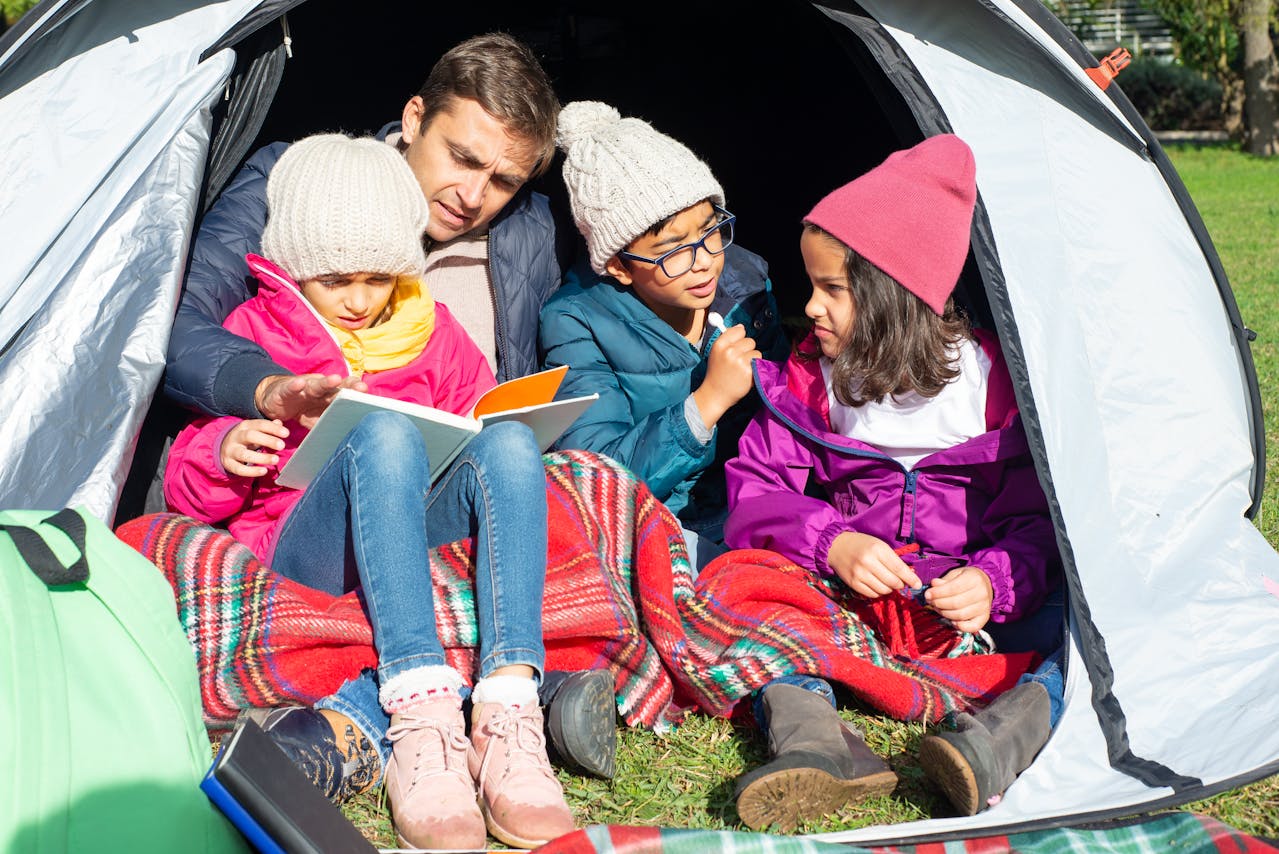
At the start of each season, sit down together and brainstorm a list of things you want to do before the season ends. Summer might include a camping trip, catching fireflies, and making homemade ice cream. Fall might be apple picking, a corn maze, and a leaf pile jump.
Tape the list to the fridge and cross things off as you go. There’s real satisfaction in that visual progress — and it gives everyone shared goals to work toward.
7. Monthly Cooking Adventure
Once a month, pick a country or culture and cook a meal from that region together. Research the recipes, shop for ingredients, and prepare the food as a team.
This tradition sneaks in geography, cultural awareness, and practical cooking skills without feeling remotely like a lesson. Plus, it’s a great excuse to try Ethiopian injera, Japanese gyoza, or Kenyan chapati — things you might never order at a restaurant.
Annual Family Traditions
8. The New Year’s Memory Jar
Place a jar in a visible spot — the kitchen counter, the living room shelf — and throughout the year, have family members drop in slips of paper recording happy moments, funny quotes, or small victories.
On New Year’s Eve (or whichever date feels right), open the jar and read through everything together. You’ll be amazed at how many wonderful moments you’d forgotten. This tradition turns an ordinary evening into a highlight reel of your year.
9. Annual Birthday Interviews
Each year on your child’s birthday, sit down and ask them the same set of questions: What’s your favorite color? What do you want to be when you grow up? Who’s your best friend? What’s your favorite food?
Record their answers in a journal or on video. Over the years, you’ll build an incredible record of how they’ve changed and grown. When they’re eighteen, hand them the complete collection. Few gifts are more meaningful than that.
10. The Annual Family Adventure
It doesn’t have to be a two-week vacation. It can be a day trip to a state park, a weekend camping trip, or even a “staycation” where you explore your own city like tourists. The key is doing it every year, roughly at the same time.
Over decades, these trips become the stories your family tells at every gathering. “Remember when Dad got lost on the trail?” “Remember when it rained the entire weekend and we played cards in the tent?” Those are the moments that stick.
Traditions Built Around Giving Back
11. An Annual Service Day
Choose one day a year when your family volunteers together. It could be serving meals at a local shelter, participating in a neighborhood cleanup, or organizing a donation drive.
Research from the Corporation for National and Community Service shows that youth who volunteer are more likely to continue volunteering as adults. But beyond the statistics, there’s something powerful about working alongside your children toward a purpose that’s bigger than your own household.
12. The Birthday Giveback

In addition to celebrating your child’s birthday, build in a giving component. Maybe they choose a charity to donate to, or they select gently used toys to pass along to children who need them.
This isn’t about guilt or taking away from their special day. Frame it as an addition: “You have so much to celebrate — let’s share some of that good stuff with others.” Most kids, when given the choice, surprise you with their generosity.
Traditions That Preserve Your Family’s Story
13. The Family Time Capsule
Once a year, gather items that represent your family’s current life: a photo, a drawing from each child, a note about what you’re working on, a newspaper headline, a small memento. Seal it all in a box or jar, label it with the date, and store it away.
Open your capsules together after a set period — five years works well. You’ll laugh, you’ll cringe at the hairstyles, and you’ll feel deeply grateful for how far you’ve come. Over time, your collection of capsules becomes a tangible archive of your family’s evolution.
How to Make Your New Family Traditions Actually Stick
Starting a tradition is easy. Maintaining one? That’s where most families struggle. Here are a few practical strategies to help your new traditions take root:
- Start with just one or two. Trying to launch five new traditions at once is a recipe for burnout. Pick the one that excites your family most and commit to it for three months before adding another.
- Put it on the calendar. Treat your tradition the same way you’d treat a doctor’s appointment. If it’s not scheduled, it’s not real.
- Involve everyone in the planning. Kids (and partners) are far more invested in traditions they helped choose. Even letting a child pick the game for game night gives them ownership.
- Be flexible. If something isn’t working, adjust it. Traditions are supposed to serve your family, not the other way around. The goal is connection, not perfection.
- Document what you do. Take photos, keep a journal, save ticket stubs. These artifacts become the proof that your traditions existed — and they become traditions in their own right.
The Bottom Line: Start Small, Stay Consistent
You don’t need elaborate plans, a big budget, or a Pinterest-worthy setup to build meaningful family traditions. You need intention, consistency, and a willingness to show up — even on the nights when everyone’s tired and takeout sounds easier than cooking together.
As family scholar William Doherty wrote in The Intentional Family, families stay connected only by being deliberate about their traditions and time together. Without that intentionality, he warns, families drift toward what he calls “entropy” — a gradual loss of closeness and coherence.
The good news? You get to decide what kind of family you want to be. And every tradition you start — no matter how small — is a vote for the kind of family story you’re writing.
So pick one tradition from this list. Just one. Try it this week. And see what happens.